

When someone needs a plumber, accountant, dentist, electrician or café, they often search for a business close to where they live or work.
That might mean searching “near me”, adding a suburb to the query, or checking Google Maps before visiting a website. For businesses that serve a particular area, being visible in those local searches can have a direct effect on enquiries, phone calls and visits.
This is where local SEO becomes important.
Local SEO is not simply about adding “Melbourne” to every page. It is about making it clear where your business operates, what it offers and why local customers should trust it.
What local SEO actually involves
Local SEO helps search engines connect your business with people searching in a particular geographic area.
For a business in Melbourne, that may include searches such as:
- accountant in Carlton
- electrician near Richmond
- café in South Yarra
- wedding photographer Melbourne
- affordable SEO for small business Melbourne
The right strategy depends on how your business operates. A shop may serve customers from a specific suburb, while a mobile service business may travel across several parts of Melbourne. An online business may serve all of Australia but still have a physical location customers want to verify.
A useful local SEO Melbourne strategy reflects the real service area rather than trying to target every suburb indiscriminately.
Start with your Google Business Profile
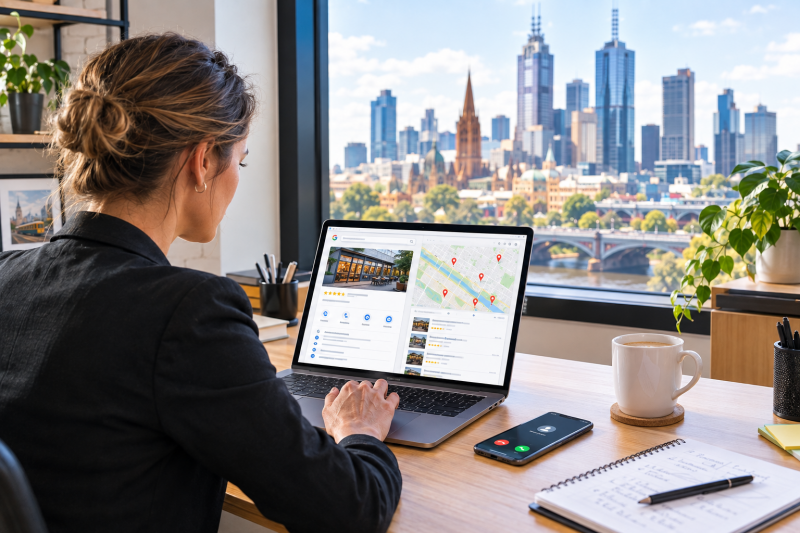
Your Google Business Profile is one of the most important parts of local search visibility.
It can appear in Google Maps, local search results and business-related searches. It also gives potential customers quick access to information such as:
- your business name
- address or service area
- phone number
- opening hours
- website
- reviews
- photos
- services
An incomplete or poorly maintained profile can create uncertainty. Incorrect hours, an outdated phone number or an unclear business category may cause people to move on to another provider.
Make sure your profile accurately reflects your business and is kept up to date as things change.
Choose the right primary category
Google uses business categories to understand what a company does.
Your primary category should describe the main service or business type as accurately as possible. Additional categories can be added where relevant, but they should not be used simply to target unrelated searches.
For example, a business that provides residential electrical work should not select categories that suggest services it does not actually offer.
Category selection may seem like a small detail, but it helps establish the context in which your profile should appear.
Make your website locally relevant
Your website should make it easy for customers to understand where you operate.
That may include:
- a clear service area
- location information
- relevant suburb or regional references
- directions or access details
- local examples of work
- testimonials from customers in the area
- contact details that match your Google profile
This information should be written naturally. Repeating a suburb name in every sentence does not make a page more useful and can make the content sound artificial.
A strong location page explains how your business serves that area, not just that the area exists.
Build dedicated service pages where appropriate
Many small businesses make the mistake of placing all services on one general page.
If your business offers several important services, separate pages can help both customers and search engines understand what you do.
For example, a Melbourne-based building company might have individual pages for:
- home renovations
- bathroom renovations
- kitchen renovations
- extensions
- outdoor living spaces
Each page can then explain the specific service, common questions, process, expected outcomes and relevant service areas.
This creates stronger opportunities for internal linking and helps visitors reach the most relevant information more quickly.
Keep your business details consistent
Your business name, address, phone number and website should be consistent wherever they appear online.
These details may be listed on:
- your website
- Google Business Profile
- local directories
- industry websites
- social media profiles
- chamber of commerce pages
- professional associations
Small differences can create confusion. For example, using several different phone numbers or slightly different versions of the business name may make it harder for search engines and customers to connect those listings to the same business.
Review your important listings periodically and correct outdated information.
Reviews influence trust and local decisions
Reviews are important because they help potential customers decide whether your business is credible.
They can also provide useful context about the services you offer and the areas you serve. A review mentioning a specific service or suburb may reinforce the relevance of your business, although reviews should never be manipulated or artificially created.
The most sustainable approach is to:
- deliver a good customer experience
- make it easy for satisfied customers to leave feedback
- respond professionally to reviews
- address genuine concerns where possible
- avoid offering incentives in ways that violate platform rules
A thoughtful response to a review can also show prospective customers how your business communicates.
Local content should solve local problems
A blog can support local SEO, but only when the content is genuinely useful.
Instead of publishing a series of pages with almost identical wording for different suburbs, consider creating content that answers questions local customers actually ask.
Examples might include:
- how to prepare your Melbourne home for winter
- common plumbing issues in older inner-city properties
- what to check before hiring a local builder
- how much commercial cleaning costs in Melbourne
- choosing the right accountant for a growing business
This kind of content can demonstrate practical knowledge while naturally connecting your services with the communities you serve.
Do not create pages for areas you do not serve
It can be tempting to create location pages for every suburb in Melbourne.
However, if your business does not actually serve those areas, the pages may not help customers and could weaken the overall quality of the website. Visitors quickly notice when a location page contains generic wording with no meaningful local information.
A smaller number of useful pages is usually better than a large collection of thin, repetitive ones.
Local links and mentions can help
Links and mentions from relevant local websites can support your visibility and reputation.
Potential sources may include:
- local business associations
- community organisations
- industry directories
- local sponsorships
- suppliers and partners
- event websites
- regional publications
The focus should be relevance and legitimacy. Buying large volumes of unrelated links is unlikely to create lasting value and may expose the website to unnecessary risk.
Local SEO and AI search visibility
AI-powered search tools increasingly answer questions about local businesses, services and recommendations.
To improve your chances of being understood in these systems, keep your business information clear and consistent across your website and external profiles.
It also helps to explain:
- what your business does
- who you serve
- where you operate
- what makes your service different
- how customers can contact you
- what questions customers commonly ask
There is no guaranteed way to appear in every AI-generated result. However, businesses with clear, trustworthy and well-organised information are easier for both search engines and AI systems to interpret.
A simple local SEO checklist
If you are reviewing your local visibility, start with these questions:
- Is your Google Business Profile complete?
- Is the primary category accurate?
- Are your opening hours current?
- Does your website clearly explain where you operate?
- Are your important services described on separate pages?
- Do your online listings use consistent details?
- Are you actively and professionally managing reviews?
- Do you have useful content that answers local customer questions?
- Are you measuring calls, enquiries and direction requests?
You do not need to change everything at once. Start with the areas most likely to affect customer trust and visibility.
Final thoughts
Local SEO helps small businesses compete for attention in the areas they actually serve.
For Melbourne businesses, that may mean improving your Google Business Profile, clarifying your service areas, strengthening your website and building trust through reviews and useful information.
The best results come from accuracy and relevance rather than excessive repetition. When your business information is clear, consistent and genuinely helpful, you make it easier for local customers to find you and easier for search systems to understand what you offer.
Add comment
Comments